Free Discovery and Consultation Call


What is Ableism, How You Contribute to It, and How You Can Stop
Anna Kirsanov M.A Psychology | Professional Certified Life Coach
12/8/20234 min read


Ableism is a form of discrimination that marginalizes and oppresses individuals with disabilities. It is a harmful attitude and belief system that assumes disabled people are inferior to those without disabilities. Ableism can be overt or subtle, and it permeates many aspects of society, including language, policies, and social interactions. The challenge with this is that is heavily engrained into our society and requires intentional effort to combat it.
To combat ableism, it is crucial to first understand its various manifestations. Ableism can manifest in the form of exclusion, stereotypes, and assumptions about disabled people's capabilities. It can also be seen in the lack of accessibility and accommodations provided in public spaces, educational institutions, and workplaces. This seems to be the most tangible one where a building may not have a ramp to get inside because the "assumption" is that everyone that belongs can get themselves in.
How You Contribute to Ableism
It is important to recognize that everyone, regardless of their intentions, can contribute to ableism. Here are a few ways in which you might unknowingly contribute to ableism:
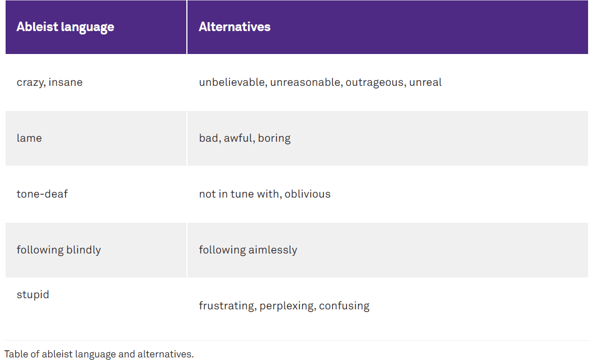
Using derogatory language: Using derogatory terms or slurs that demean disabled individuals not only perpetuates stereotypes but also contributes to a culture of exclusion and discrimination. It is essential to be mindful of the language we use and to educate ourselves on respectful and inclusive terminology.
Northwesterm University provided a really good list of examples of terminology to use instead of ableist language
Examples of what to say instead of ableist language
A much more comprehensive list of vocab, explanations and alternatives is attached in the link.
How You May Be Contributing to Ableism
Assuming competence: Making assumptions about a person's abilities based on their disability is a common form of ableism. It is important to remember that disabilities are diverse, and each person's capabilities should be evaluated on an individual basis. Avoid making assumptions and instead focus on understanding and supporting individuals based on their unique needs and strengths.
Ignoring accessibility: Neglecting to consider accessibility in our daily lives can contribute to ableism. Whether it's not providing accessible entrances, failing to provide captions for videos, or not considering the needs of individuals with disabilities in event planning, these oversights can exclude and marginalize disabled individuals. It is crucial to prioritize accessibility and make efforts to create inclusive environments.
Ignoring the voices of disabled individuals: Disregarding the experiences and perspectives of disabled individuals can perpetuate ableism. It is important to listen to and amplify the voices of disabled individuals, as they are the experts on their own lives. By actively seeking out and valuing their input, we can challenge ableist narratives and work towards a more inclusive society.
Engaging in pity or inspiration seeking: Pitying or objectifying disabled individuals as sources of inspiration can reinforce ableism. Disabled individuals are not here to inspire or invoke pity; they are individuals with their own aspirations, dreams, and achievements. It is crucial to treat disabled individuals with respect and dignity, focusing on their strengths and capabilities rather than reducing them to objects of inspiration or pity.
How to Stop Contributing to Ableism
Now that we have identified some common ways in which ableism is perpetuated, let's explore five key tips to help you stop contributing to ableism:
Educate yourself: Take the time to educate yourself about disabilities, the experiences of disabled individuals, and the language and terminology that is respectful and inclusive. Read books, articles, and personal stories written by disabled individuals to gain a deeper understanding and challenge your preconceived notions.
Listen and learn from disabled individuals: Actively seek out the perspectives and experiences of disabled individuals. Follow disabled activists, join online communities, and engage in conversations that center around disability rights and inclusion. By listening and learning from disabled individuals, you can gain valuable insights and challenge ableist beliefs.
Advocate for accessibility: Use your voice and privilege to advocate for accessibility in all areas of life. Whether it's in your workplace, educational institution, or community, speak up for the rights and needs of disabled individuals. Encourage the implementation of accessibility measures and support initiatives that promote inclusivity.
I wrote a blog post about navigating conflict at work and it has tips that can help you navigate inaccessibility or ableist behavior at work.
Challenge ableist language and behavior: Be aware of the language you use and the behavior you exhibit. Challenge yourself and others when ableist language or behavior arises. By addressing and correcting these instances, you can help create a more inclusive and respectful environment.
Support disabled individuals and organizations: Show your support for disabled individuals and organizations by donating, volunteering, or participating in advocacy campaigns. By actively supporting disabled individuals and organizations, you can contribute to dismantling ableism and promoting a more inclusive society.
Ableism is a pervasive issue that requires collective efforts to combat. By understanding ableism, recognizing our own contributions to it, and taking action to stop perpetuating it, we can work towards a more inclusive and equitable society for all. Educating ourselves, listening to disabled individuals, advocating for accessibility, challenging ableist language and behavior, and supporting disabled individuals and organizations are crucial steps in dismantling ableism and creating a more inclusive future.

Subscribe to My Personalized Email List
- discounts on services
-exclusive content
- personalized tips based on your inteests
Never spam!
Unsubscribe any time :)
